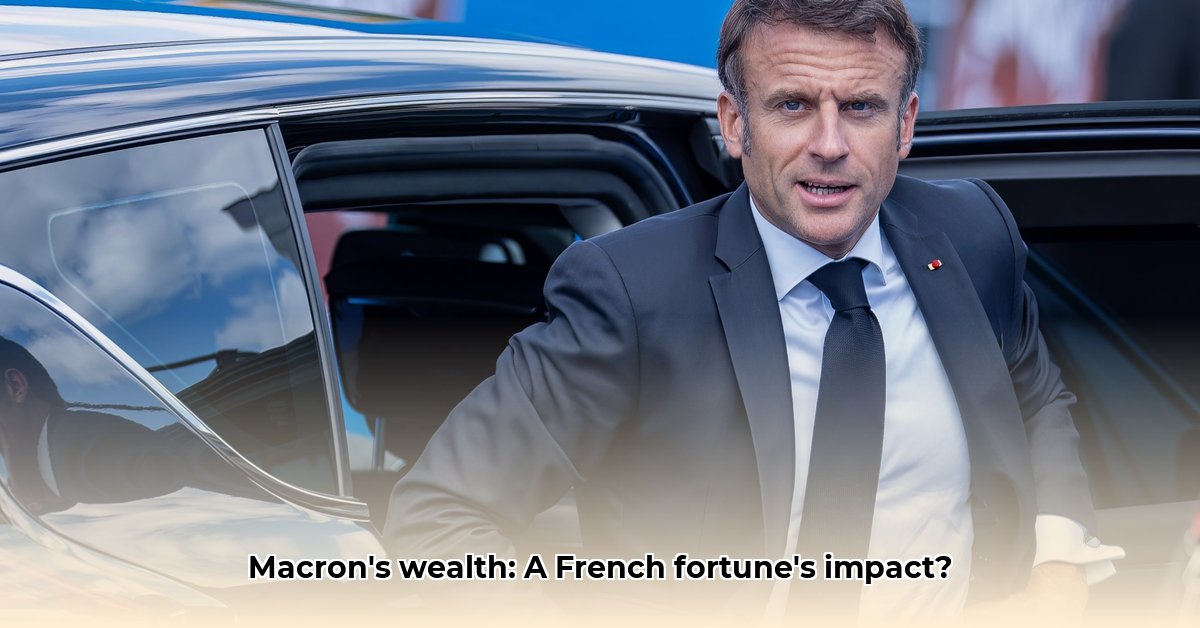
The Implications of Macron's Re-election on the French and EU Economies
Determining President Macron's precise net worth proves surprisingly difficult, with a notable lack of publicly available information. This opacity, however, shouldn't overshadow the far more significant analysis of his re-election's impact on France's and the EU's economic landscapes. The absence of transparent financial data raises questions about public trust and investor confidence, but these concerns are secondary to the broader economic implications of his policies. How will his second term shape France's economic trajectory and its role within the EU?
The Political Economy of Opaque Wealth
The mystery surrounding Macron's personal finances is itself a significant political issue. It fuels debates about transparency and accountability in government. Professor Mathilde Dubois, from Sciences Po, notes, "The lack of transparency surrounding the President's wealth erodes public trust, fueling perceptions of elitism and further polarizing the political landscape." This perceived lack of openness can affect both domestic and foreign investor confidence, potentially influencing capital flows and economic growth. Does this uncertainty stifle economic dynamism, or does the predictability of his continued leadership outweigh these concerns?
France's Economic Outlook: Stability and Challenges
Macron's re-election provides a degree of economic stability, particularly beneficial for investors who value predictability. However, significant economic challenges persist. France, like many other EU nations, faces rising inflation and global supply chain disruptions. Furthermore, significant social and economic inequality remains. Will Macron’s policies effectively address these issues, or will they exacerbate existing divisions? The continued presence of challenges to social cohesion and economic inequality necessitate a closer examination of his economic policies, not just his personal wealth.
Macron's EU Agenda: Integration and Geopolitical Shifts
France plays a pivotal role in the European Union, and Macron's pro-EU stance is crucial for maintaining the bloc's unity, especially amidst the ongoing war in Ukraine. His reelection reinforces the EU's overall stability. However, domestic political challenges and the need for broad EU consensus present significant hurdles. The question remains: can Macron effectively navigate these complexities and foster genuine economic integration within the EU, or will internal and external pressures hinder his ambitious agenda? How will his economic policy choices influence the EU's response to global challenges and its long-term economic competitiveness?
Analyzing Macron's Impact: A Data-Driven Approach
Rather than focusing on the elusive figure of his net worth, a more effective analysis centers on the tangible impacts of Macron's policies. This necessitates a multi-faceted approach:
Policy Scrutiny: Detailed examination of his specific economic policies, encompassing taxation, investment strategies, and social welfare programs.
Key Economic Indicators: Close monitoring of France's GDP growth, inflation rates, unemployment figures, and investor sentiment. These quantitative measures provide a much clearer picture than speculation about his personal wealth.
Market Response Analysis: Careful observation of market reactions to government policy announcements and decisions, providing insights into investor confidence and economic outlook.
Social Impact Assessment: Evaluation of how his policies impact different socioeconomic groups, illuminating the distributional effects of his economic programs and their overall contribution to social welfare.
This comprehensive analysis offers a far more robust understanding of Macron's economic impact than any speculation about his personal finances.
Key Takeaways:
- Macron's re-election offers economic stability but doesn't resolve underlying challenges like inequality and global uncertainties.
- The lack of transparency surrounding his wealth raises questions about governance and public trust.
- His continued pro-EU stance is crucial for the bloc's unity and economic integration, especially amidst geopolitical instability.
- A data-driven approach focusing on policy analysis and key economic indicators provides a more insightful assessment of his impact than speculation about his net worth.
The long-term effects of Macron's second term on the French and EU economies remain to be seen. Continued monitoring of economic indicators and a rigorous analysis of his policy implementation are vital for assessing his legacy. The focus should remain on the tangible and measurable impact of his actions, not the elusive nature of his personal wealth.